 |
|
 |
Get our FREE |
|
|
|
|
Get our FREE |
    |









All trucking companies and owners of heavy vehicles operating on public highways in the United States need to be aware of an important annual requirement: filing the Heavy Highway Vehicle Use Tax. This federal tax applies to motor vehicles with a taxable gross weight of 55,000 pounds or more that operate on public highways. Knowing the deadlines can help you stay in compliance with the IRS and avoid unnecessary penalties.
Deadlines and key information:
The current tax period for Form 2290, Heavy Highway Vehicle Use Tax Retu
, runs from July 1, 2026, through June 30, 2027.
The filing deadline depends on the month in which the vehicle is first used on a public highway during that tax period. For example, if a vehicle is first used in July 2026, Form 2290 must be filed by August 31, 2026. When a deadline falls on a Saturday, Sunday or legal holiday, the due date moves to the next business day. IRS.gov provides a table to help determine the exact deadline based on the month of first use.
It is important to remember that the tax filing deadline is not tied to the date the vehicle is registered with the state.
If a taxpayer acquires an additional vehicle in their name and puts it on the road in a month other than July, the tax must also be paid, but it is prorated based only on the months the vehicle is in service.
In addition, anyone who reasonably expects to use a vehicle for 5,000 miles or less during the tax period (7,500 miles or less for agricultural vehicles) must still file Form 2290. In these cases, the tax is suspended and no payment is due when the retu
is filed. However, if the vehicle later exceeds that mileage limit during the tax period, the full tax becomes due.
How to File Form 2290
All taxpayers are encouraged to file electronically (e-file). In addition, e-filing is required for anyone reporting 25 or more vehicles in their name.
IRS.gov provides a list of IRS-authorized e-file providers. All vehicles for which the tax is reported are listed on Schedule 1 of Form 2290. By following the instructions from the authorized provider you choose, you may receive your electronically stamped Schedule 1 within minutes.
If you prefer to file by mail, it is essential to use the correct mailing address listed in the Form 2290 instructions. Taxpayers who file by mail generally receive their stamped Schedule 1 about six weeks after the IRS receives the form.
The stamped Schedule 1 is an important document: it serves as proof of payment when registering vehicles with a state, unless the vehicle is specifically exempt from this requirement.
Filing Form 2290 on time helps avoid penalties, interest and problems when renewing vehicle registration. If you have questions about your specific situation - whether it involves a new vehicle, one sold during the tax period, or a vehicle that qualifies for the mileage-based suspension - it is best to consult a tax professional familiar with Form 2290 before your deadline.

Your commercial driver’s license does more than prove that you are authorized to drive. It is also part of databas...
read more...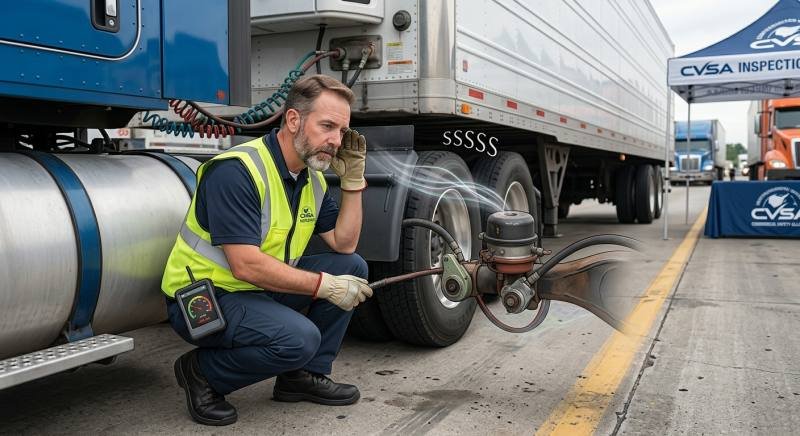
A small air leak may seem minor, but on a truck equipped with air brakes, it can quickly become a serious problem. The s...
read more...
For a professional truck driver, taking your eyes off the road for just a few seconds can be enough to tu a normal situ...
read more...
All trucking companies and owners of heavy vehicles operating on public highways in the United States need to be aware o...
read more...