 |
|
 |
Get our FREE |
|
|
|
|
Get our FREE |
    |







When we talk about safety in heavy-duty trucking, most folks think about brakes, lights, or hours of rest. But one of the most critical—and often most overlooked—factors is right under the truck: tire tread depth.
On Class 7 and 8 vehicles, hauling tons of freight and racking up thousands of miles every month, knowing and maintaining the proper tread depth isn’t just a technical box to check—it’s a matter of safety, efficiency, and staying compliant with the law.
What Do the Regulations Say?
The Federal Motor Carrier Safety Administration (FMCSA) sets the minimum tread depth requirements:
• Steer tires: at least 4/32 of an inch in every major groove.
• Drive and trailer tires: at least 2/32 of an inch.
Running below those limits isn’t just a road hazard—it can lead to fines, CSA point hits, and even having your truck put out of service during an inspection.
More Safety, Fewer Wrecks
Proper tread depth is crucial for:
• Better traction on wet or snowy roads.
• Lower risk of hydroplaning by keeping enough channels to move water out.
• Shorter, safer stopping distances—critical on busy interstates.
• Fewer blowouts and skids, especially on long hauls with heavy loads.
A wo
-out tire is more than just old rubber—it’s a direct risk factor for serious crashes.
Economic and Operational Impact
Taking care of your tread doesn’t just save lives—it saves money and keeps you rolling:
• Fuel efficiency: good tires reduce rolling resistance.
• Longer lifespan: allows for retreading, saving fleets thousands of dollars.
• Preventive diagnostics: uneven wear can flag suspension or alignment issues early.
A truck sidelined by a ticket—or worse, a crash—costs way more than replacing tires on schedule.
How to Check Your Tread
There are quick, simple ways to stay on top of it:
• Tread depth gauge: the most accurate tool.
• Multiple-point inspection: measure at several spots around the tire to catch uneven wear.
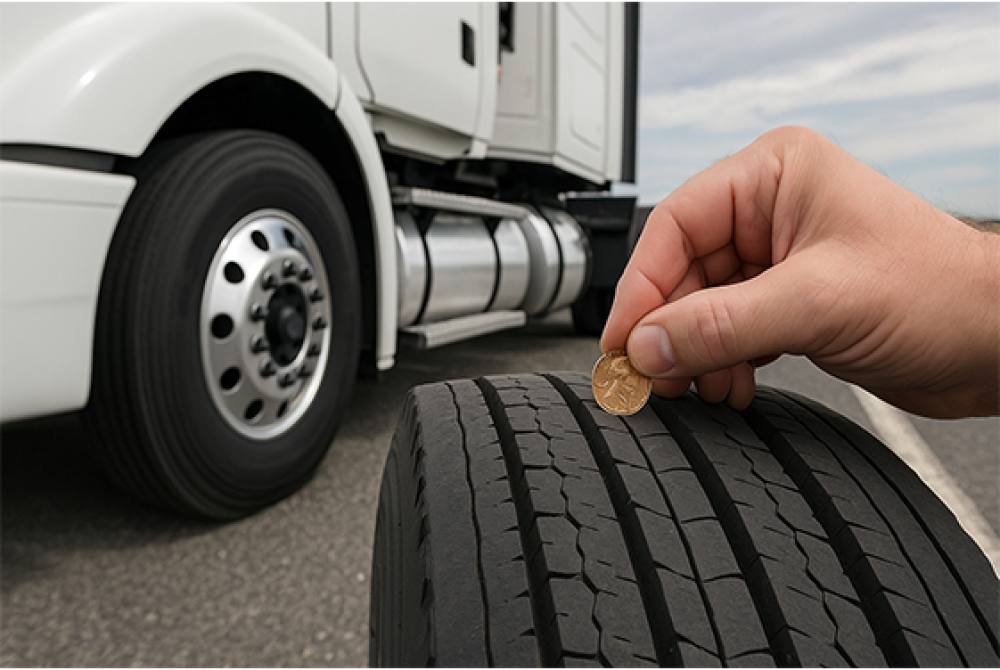
• Penny test: stick a penny into the groove—if you can see all of Lincoln’s head, you’re under 2/32" and need new tires.
Making this part of every pre-trip or preventive inspection can be the difference between a safe run and a highway disaster.
At the end of the day, with every mile you drive, your connection to the road comes down to just a few inches of rubber. Keeping that in good shape is one of the smartest moves you can make.

In trucking, tight delivery schedules can put drivers under a lot of pressure. The real problem starts when a dispatcher...
read more...
Many commercial drivers focus on maintaining a clean driving record, avoiding traffic violations, and protecting their C...
read more...
In our previous edition, we discussed tire blowouts during the summer months, a problem that becomes increasingly common...
read more...
Every driver understands the concept of blind spots, yet they remain one of the leading causes of accidents involving co...
read more...