 |
|
 |
Get our FREE |
|
|
|
|
Get our FREE |
    |









Although low libido is often associated with age or medical issues, it is increasingly affecting young truck drivers—many of them in the prime of their working lives. Far from being a taboo topic, this phenomenon has emotional, psychological, and physiological roots that science is now taking seriously.
Research published in the Jou
al of Sexual Medicine and Sleep Medicine Reviews shows that sexual desire is directly linked to the balance between rest, stress levels, and emotional stability. Yet the lifestyle of a truck driver—especially a young driver just starting in the industry—often disrupts all of these factors.
Long shifts, pressure to meet delivery schedules, financial uncertainty, and loneliness on the road raise cortisol levels, the body’s primary stress hormone. Studies from Stanford University show that elevated cortisol reduces testosterone production, even in men under 30, affecting both libido and overall energy.
Sleep deprivation, a common reality in commercial trucking, adds to the problem. Poor sleep disrupts hormonal regulation and decreases sexual drive, as highlighted in a meta-analysis from the National Institutes of Health (NIH). Many young drivers report constant fatigue, irritability, and emotional disconnection—factors that also diminish libido.
On the psychological side, research from the American Psychological Association indicates that performance anxiety—the pressure to “perform” after days or weeks away from home—creates an emotional block that directly affects sexual response. The mind and body simply stop working in sync.
Prolonged isolation also plays a key role. The lack of emotional closeness, growing distance from a partner, and the feeling of “living alone” on the road create emotional strain that weakens desire, even in young and otherwise healthy individuals.
Understanding this issue isn’t about shame—it’s about health. Libido is a reflection of physical and mental well-being. To restore it, science recommends improving sleep habits, strengthening emotional connection with a partner, reducing stress through active breaks, and seeking professional support if the problem persists.
Because even in youth, the body needs balance, rest, and human connection.

In trucking, tight delivery schedules can put drivers under a lot of pressure. The real problem starts when a dispatcher...
read more...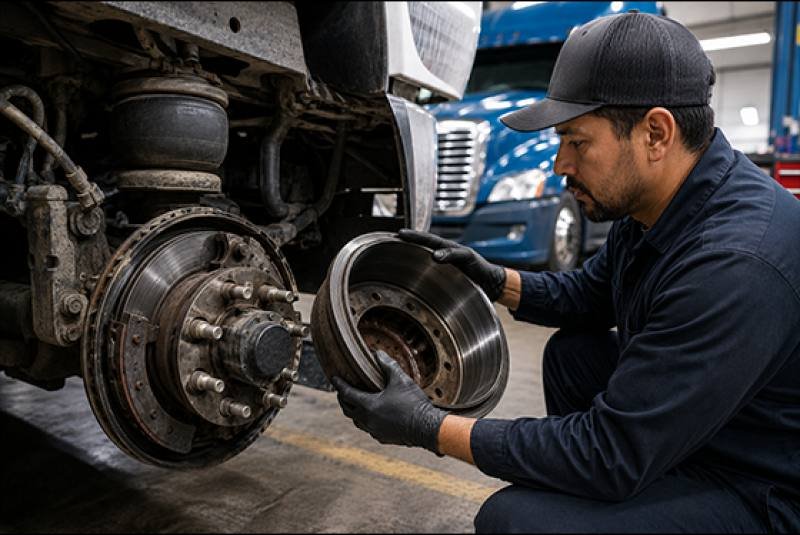
From August 23 through 29, 2026, Brake Safety Week will take place, with inspections focused on commercial vehicle braki...
read more...
Construction zones demand a driver’s full attention, especially when operating a loaded truck. Narrow lanes, sudde...
read more...
Ah, summer! It is one of the busiest times of the year for truckers, and with long hours on the road and plenty of fatig...
read more...