 |
|
 |
Get our FREE |
|
|
|
|
Get our FREE |
    |







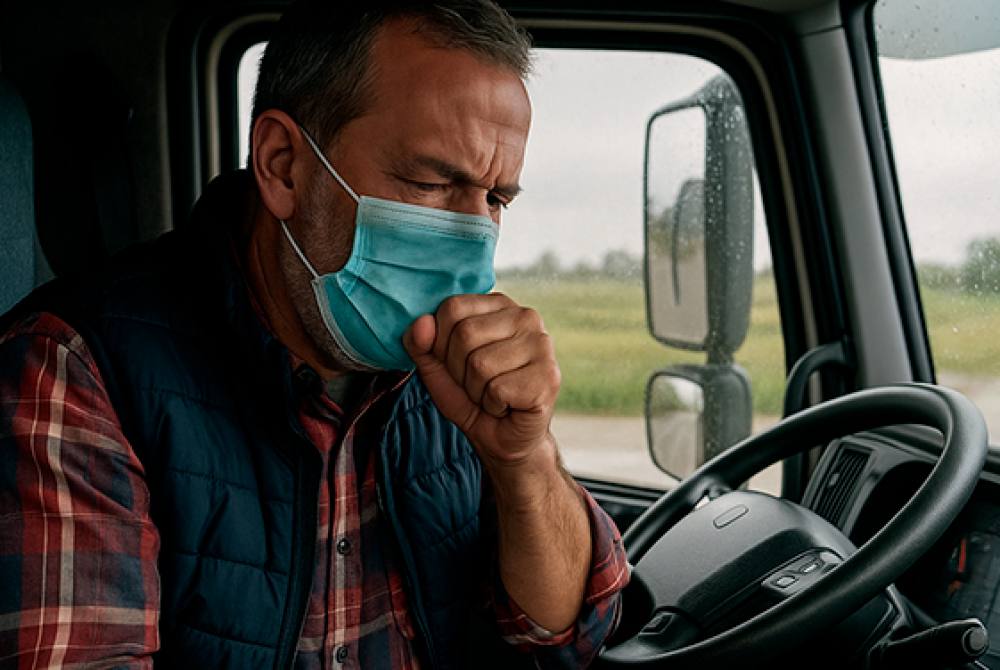
For most professional drivers, respiratory health isn´t high on the priority list. Yet, spending long hours in a closed vehicle—exposed to dust, fumes, poorly maintained A/C systems, or sudden temperature changes—can create the perfect environment for developing serious respiratory illnesses.
According to Cal/OSHA (Califo
ia Division of Occupational Safety and Health), employers are required to provide working conditions free from recognized health hazards, including airbo
e pollutants like dust, mold, chemical vapors, or viruses.
Top Health Risks Inside the Cab
Truck drivers may be at risk of:
Recommended Prevention Measures
What the Law Says
Cal/OSHA (Title 8, Califo
ia Code of Regulations) mandates corrective measures when known respiratory hazards are present.
The Federal OSHA Act (29 CFR 1910) requires protection from biological hazards—rules that also apply to transport workers.
FMCSA regulations demand that drivers maintain good physical and mental health, including proper respiratory function.
Protecting your lungs means protecting your job. A clean cabin, fresh air, and timely medical attention could be the difference between another day on the road—or an unexpected medical leave.

A recent decision by the U.S. Supreme Court overtu ing several tariffs imposed during the Donald Trump administration ha...
read more...
The U.S. Department of Transportation (DOT) has announced the closure of 550 CDL training schools deemed fraudulent foll...
read more...
In the transportation industry—where fuel, maintenance, and insurance costs constantly pressure profitability&mdas...
read more...
Cargo theft no longer happens only through highway robberies. In recent years, a more sophisticated scheme has been grow...
read more...