 |
|
 |
Get our FREE |
|
|
|
|
Get our FREE |
    |








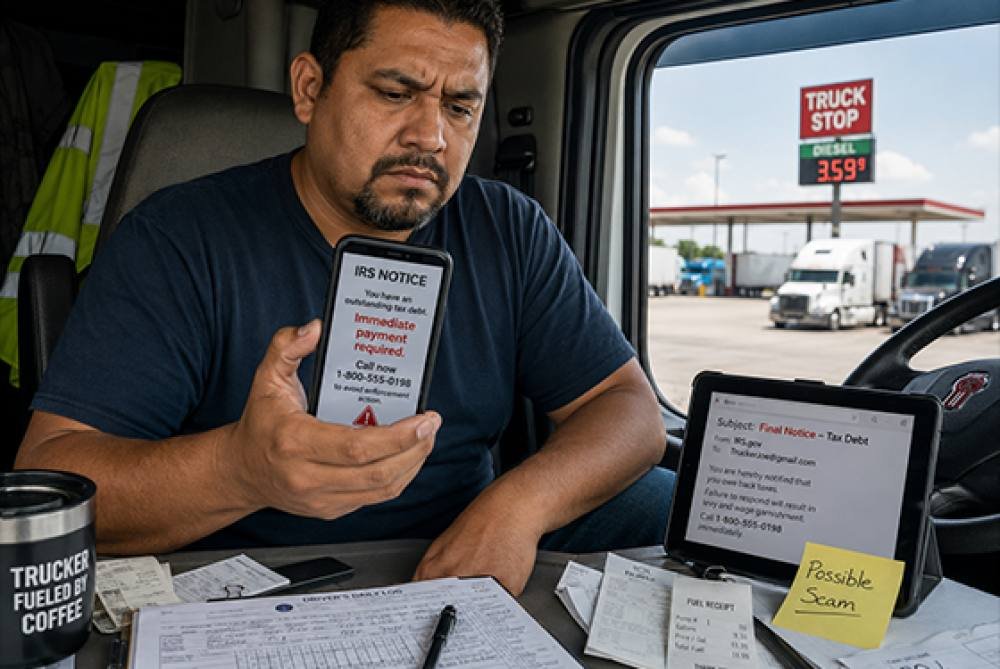
Ah, summer! It is one of the busiest times of the year for truckers, and with long hours on the road and plenty of fatigue, it can be easy to let your guard down and become a target for tax scams.
Many people think the danger ends after April 15, but scammers never take a break. They look for unsuspecting taxpayers all year long. Identity theft, phone scams, and phishing have no season. And you, my trucker friend, who spends long days behind the wheel and away from home, need to stay alert.
Here are the first three scams from the IRS “Dirty Dozen,” the agency’s annual list of common tax-related scams, so you know what to watch for:
1. Identity Theft
Thieves steal personal and financial information to commit fraud. This may include your Social Security number or banking information. With that information, a criminal can file a fake tax retu
in your name and claim a fraudulent refund.
Many victims do not realize what happened until they try to file their own retu
and the IRS tells them that a retu
has already been filed using their Social Security number. For truckers, this can be especially difficult because being on the road may make it harder to check your mail and respond quickly.
The IRS provides identity protection resources at IRS.gov, including information on what to do if your identity has already been stolen. One smart step is to request an IP PIN, a six-digit number that helps prevent someone else from filing a federal tax retu
using your Social Security number.
2. Phone Scams
Scammers may pretend to be calling from the IRS with one goal: stealing your money. They may claim that you owe taxes and demand immediate payment, often through a wire transfer, gift card, or prepaid debit card.
Some scammers become aggressive and may even threaten you with ARREST OR DEPORTATION. They may also know personal details, such as the last four digits of your Social Security number, to make the call seem legitimate.
Remember: if you owe taxes, the IRS generally contacts you first by mail. The agency does not demand immediate payment through prepaid cards or wire transfers. If you receive a suspicious call, hang up and do not provide any personal or financial information.
3. Phishing
Criminals send emails that appear to come from the IRS, using a fake refund, tax notice, or audit threat to get your attention. They may even create fake websites that look similar to IRS.gov in an attempt to steal your personal information.
The IRS does not normally initiate contact by email, text message, or social media to discuss your tax account. If you receive a suspicious message, do not click any links or open attachments. Forward suspicious emails to phishing@irs.gov.
Do not let scammers catch you off guard. Stay alert, protect your personal information, and be suspicious of anyone pressuring you to make an immediate payment.
And if you have been a victim of identity theft, call Jagg Tax Solution, Inc. at (909) 590-9307. We can help you deal with this or other IRS-related problems.
In trucking, tight delivery schedules can put drivers under a lot of pressure. The real problem starts when a dispatcher...
read more...
From August 23 through 29, 2026, Brake Safety Week will take place, with inspections focused on commercial vehicle braki...
read more...
Construction zones demand a driver’s full attention, especially when operating a loaded truck. Narrow lanes, sudde...
read more...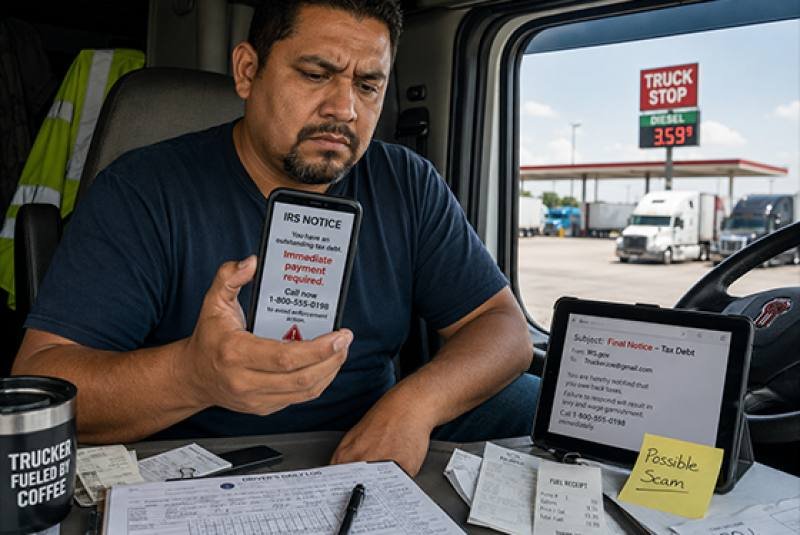
Ah, summer! It is one of the busiest times of the year for truckers, and with long hours on the road and plenty of fatig...
read more...