 |
|
 |
Get our FREE |
|
|
|
|
Get our FREE |
    |








In recent years, more and more trucks in the United States have been equipped with Automatic Emergency Braking (AEB) systems. On paper, it sounds perfect: sensors, radar, and cameras that detect danger and brake before a crash happens. But in real life, the story is not that simple.
These systems work by monitoring the distance between your truck and the vehicle ahead. If they detect a sudden closing gap or collision risk, they first wa
the driver. If there is no response, the system steps in and automatically applies the brakes. In theory, this helps reduce crashes caused by distraction or fatigue, two common problems in the industry.
And yes, in many cases, it works. Studies have shown that AEB can significantly reduce rear-end collisions. In urban traffic or on congested Califo
ia highways, where sudden braking is common, it can be a valuable tool.
But here is the problem: it is not foolproof. One of the biggest risks is the false sense of security it can create. Some drivers begin to trust the system too much, which reduces their attention. AEB does not replace the driver. It only assists. And when the system fails — because yes, it can fail — reaction time is no longer the same.
Heavy rain, fog, dirty sensors, or even shadows can interfere with the system’s reading. Unexpected braking has also been reported in situations with no real danger, which can trigger an accident, especially if a heavy vehicle is following you.
On top of that, not every system reacts the same way. Some only reduce speed, while others apply full braking. And with heavy loads, the distance required to stop the truck remains significant, even with advanced technology.
In Califo
ia, where safety rules and pressure continue to increase, these systems may very well become mandatory in the future. But the real key is not just the technology itself. It is how it is used.
The message is simple: automatic braking can save lives, but it is not autopilot. Trusting it blindly can be just as dangerous as not having it at all.
On the road, the best technology is still an alert driver.
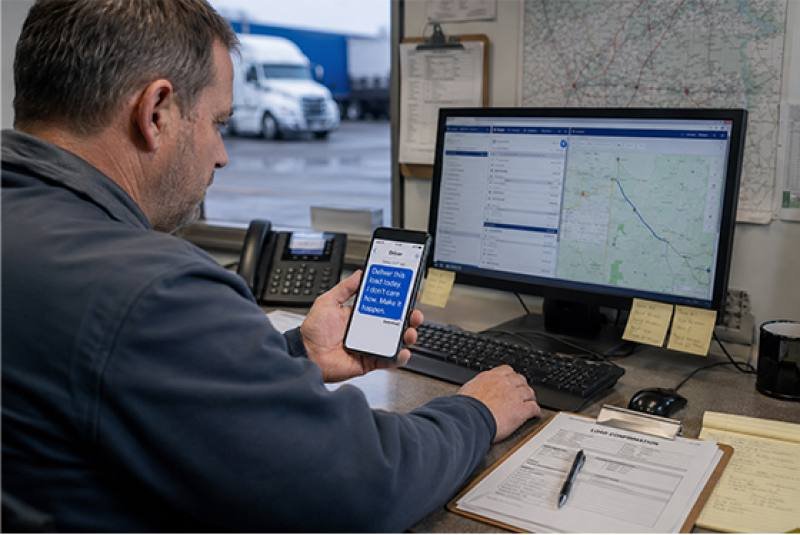
In trucking, tight delivery schedules can put drivers under a lot of pressure. The real problem starts when a dispatcher...
read more...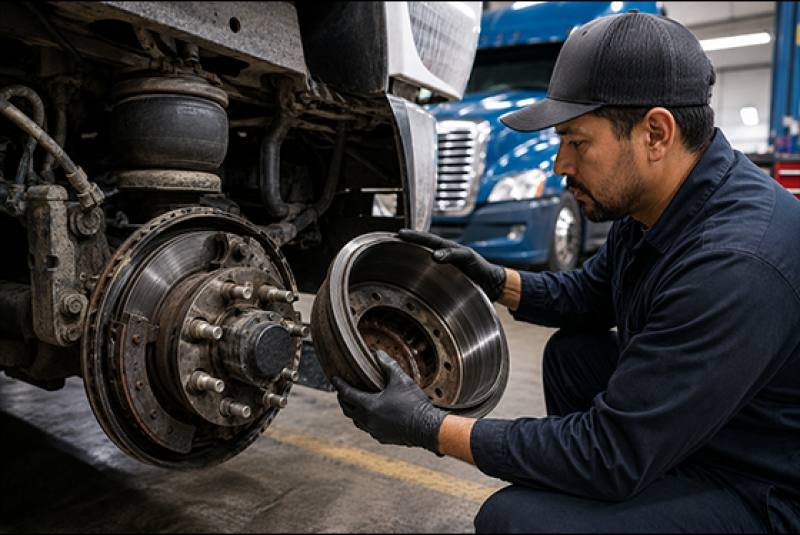
From August 23 through 29, 2026, Brake Safety Week will take place, with inspections focused on commercial vehicle braki...
read more...
Construction zones demand a driver’s full attention, especially when operating a loaded truck. Narrow lanes, sudde...
read more...
Ah, summer! It is one of the busiest times of the year for truckers, and with long hours on the road and plenty of fatig...
read more...